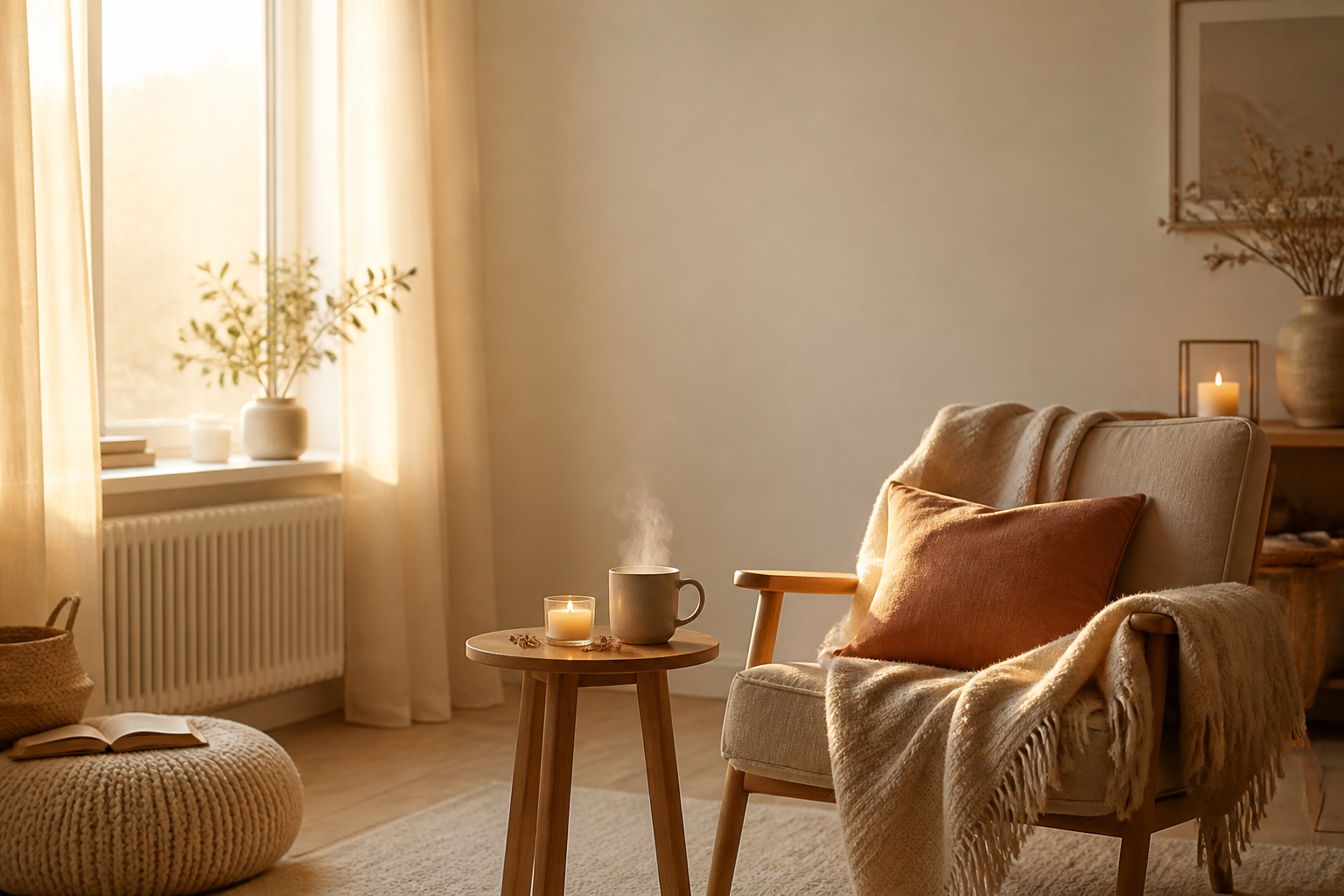
What hygge is and why it matters
If you are asking what hygge is, the simplest answer is this: a way of thinking about everyday well-being through comfort, warmth, and simple moments. It is not a rigid formula or a passing trend. Hygge is a Danish tradition linked to feeling at ease, calm, and present in daily life.
That idea fits well with mental wellness because it encourages people to slow down, create a kinder environment, and pay attention to small everyday experiences. Research on the home environment also suggests that indoor conditions can influence psychological and emotional well-being [3][4].
The principles behind a hygge-inspired life
Hygge does not depend on making big changes. In fact, it usually rests on a few very simple principles:
- Finding comfort in ordinary moments.
- Valuing warmth in your surroundings.
- Enjoying simple activities without rushing.
- Choosing presence over perfection.
Instead of turning self-care into another long checklist, hygge offers a gentler way to approach daily life. That might look like reading quietly, having a calm conversation, or setting aside time to rest without screens.
Benefits of hygge for emotional well-being
One reason hygge and well-being are often linked is that an inviting environment can support relaxation. The NIH notes that emotional wellness also benefits from habits such as getting enough rest, doing relaxing activities, and caring for the environment where you sleep and recover [1].
The point is not to promise a miracle. It is to recognize that context matters. A space that feels more orderly, soft, and comfortable can help the mind slow down. And when daily routines include mindful pauses, breathing, or simple attention exercises, it can become easier to manage everyday stress [2].
How to practice hygge at home without overcomplicating it
If you want to bring hygge into your home, think about sensations first, not perfect decoration. What matters most is that your home feels livable, peaceful, and pleasant to you.
A few simple ideas:
- Adjust lighting so the room feels softer.
- Keep basic order to reduce visual noise.
- Add textures that feel comfortable and welcoming.
- Set aside a corner for reading, resting, or unplugging.
- Build short breaks into the day to breathe and slow down.
Studies on the home and indoor environment show that housing conditions and indoor quality can be related to mental and psychological well-being [3][4]. Small changes in your environment may therefore matter more than they seem.
Hygge as part of a self-care routine
Hygge can also become part of a self-care routine. It does not need to be elaborate. It works best when it is built into simple, sustainable habits:
- Taking a quiet pause at the end of the day.
- Doing one calm activity without multitasking.
- Spending a few minutes tidying a space you use often.
- Creating a nighttime routine that supports rest.
This approach fits a slower, more conscious way of living because it focuses on how you feel while doing ordinary things. It is not about perfection; it is about presence. That makes it adaptable to many lifestyles.
Common mistakes when trying to live hygge-style
The concept is easy to misunderstand. Here are a few common mistakes:
- Thinking hygge depends on buying certain objects.
- Assuming it has to look perfect or highly aesthetic.
- Confusing comfort with filling a space with more things.
- Forgetting that the experience is personal and flexible.
The real meaning of hygge is not copying an ideal image of a cozy home. It is building an environment that helps you feel calm and emotionally supported in a realistic way.
Practical ideas to start today
If you want to begin without much effort, try a few small changes:
- Pick one area of your home and make it feel calmer.
- Reduce visual clutter with a short reset.
- Spend a few minutes each day on a quiet activity.
- Take a breathing pause before bed.
- Repeat one simple ritual that helps you end the day more peacefully.
These actions do not replace professional care or solve everything on their own, but they can help you build a gentler and more mindful routine.
In short
Hygge is an invitation to live with more comfort, calm, and attention to everyday life. By focusing on cozy spaces, mindful pauses, and simple habits, you can turn your home into a place that supports rest and emotional well-being.
If you want to improve your wellness routine, start small. Often, the difference is not doing more, but living with more presence.
Sources consulted
- [1] Emotional Wellness Toolkit — National Institutes of Health (NIH) — https://www.nih.gov/health-information/your-healthiest-self-wellness-toolkits/emotional-wellness-toolkit
- [2] Mindfulness and Meditation — NIH Health Information — https://health.nih.gov/health-topics-a-z/mindfulness
- [3] Can Homes Affect Well-Being? A Scoping Review among Housing Conditions, Indoor Environmental Quality, and Mental Health Outcomes — PubMed — https://pubmed.ncbi.nlm.nih.gov/36498051/
- [4] Neuroscientific Insights into the Built Environment: A Systematic Review of Empirical Research on Indoor Environmental Quality, Physiological Dynamics, and Psychological Well-Being in Real-Life Contexts — PubMed — https://pubmed.ncbi.nlm.nih.gov/40566252/