What is the link between hemorrhoids and constipation?
Hemorrhoids are veins located in the lower rectum and around the anus. They can develop for different reasons, but constipation is one of the factors most often linked to discomfort. Straining during bowel movements, sitting on the toilet for long periods, and eating too little fiber are all associated with hemorrhoids or with symptoms becoming more noticeable [2].
When stools are hard or dry, passing them may require more pressure. Repeated straining can irritate the anal area and make bowel movements more uncomfortable. That is why people searching for fiber for hemorrhoids are often really looking for a way to make bowel movements easier and less irritating [1][2].
Even so, food choices do not replace a professional evaluation if symptoms are severe, frequent, or changing over time. Diet can be part of day-to-day care, but it is not the whole picture.
How fiber may help in cases of hemorrhoids
Fiber plays an important role in stool consistency. A high-fiber eating pattern may help soften stools and make them easier to pass, which can reduce the need to strain and make bowel movements feel more comfortable [1]. That matters when hemorrhoid symptoms are linked to constipation.
Fiber may also support more regular bowel movements. With fewer constipation episodes, there are often fewer situations that increase pressure in the anal area [1][3].
It helps to separate symptom support from a definitive fix. A high-fiber diet may improve digestive comfort and help prevent constipation from worsening symptoms, but it is still only one part of overall care [1].
Soluble and insoluble fiber: how are they different?
Not all fiber works in the same way. In simple terms, there are two main types:
- Soluble fiber: mixes with water and forms a gel-like texture. This may help stools become softer.
- Insoluble fiber: adds bulk to intestinal contents and supports movement through the gut.
Both can be useful in a balanced eating pattern. In everyday life, it is usually more practical to include a variety of fiber-rich foods throughout the day rather than focusing on just one source [1][3].
Fiber-rich foods that can fit into your diet
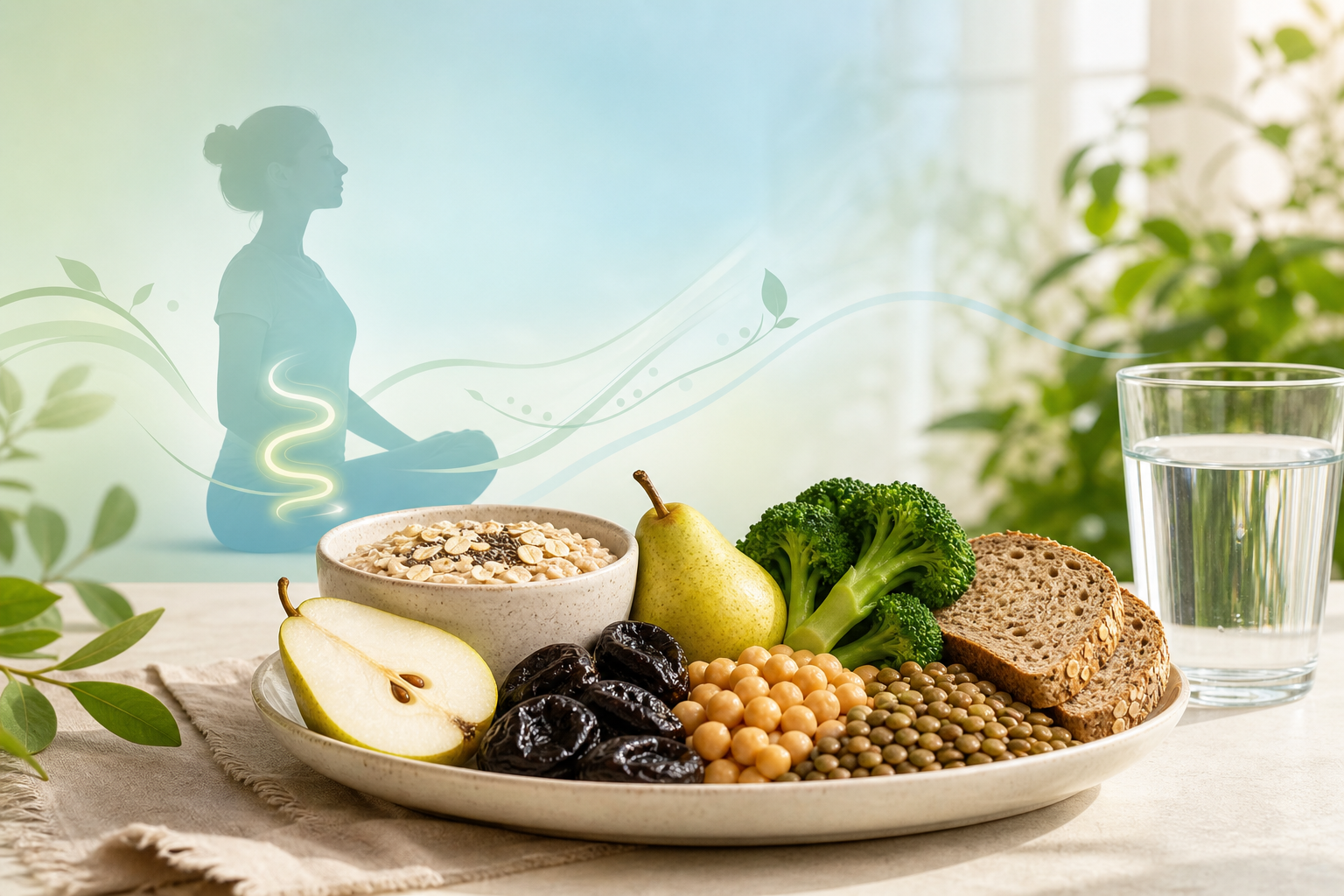
If you are wondering what to eat for hemorrhoids, a helpful starting point is often fresh, minimally processed food. Common choices include:
- Fruits such as pears, apples, plums, and berries
- Vegetables such as broccoli, spinach, carrots, and artichokes
- Legumes such as lentils, chickpeas, and beans
- Whole grains such as oats, brown rice, and whole-grain bread
- Seeds such as chia and flaxseed, in moderate amounts
Putting this into practice does not have to be complicated. Simple ideas include:
- Oatmeal with fruit for breakfast
- Adding legumes to salads or main meals
- Choosing side dishes with vegetables and whole grains
- Replacing highly processed snacks with whole fruit
It is best to increase fiber gradually. When intake rises too quickly, some people may notice gas or bloating at first [4]. A slower approach is often more comfortable and easier to maintain.
What to eat for hemorrhoids if you want to improve bowel transit
Beyond adding fiber, it helps to look at the overall routine. To improve bowel transit, it is often useful to vary fiber sources, choose natural foods more often, and drink enough fluids [1][3].
Hydration matters because fiber needs fluid to do its job more comfortably. If fluid intake is too low, dietary changes may not feel as helpful as expected [1].
Keeping fairly regular mealtimes and bathroom habits may also help. The digestive system often responds better to stable routines than to frequent disruption or delaying bowel movements [3].
Habits that may help prevent hemorrhoids
Along with food choices, a few everyday habits may help reduce repeated pressure in the anal area:
- Do not delay going to the bathroom when you feel the urge
- Avoid excessive straining
- Try not to sit on the toilet for too long [2]
- Stay physically active [3]
- Keep a steadier bowel routine
These habits do not require drastic changes. Their goal is to support more natural, less irritating bowel movements over time.
When to consider fiber supplements
Sometimes food intake alone is not enough to meet fiber needs, or it may be hard to get enough fiber consistently from meals. In those situations, some people consider fiber supplements.
Still, they are not right for everyone, and tolerance can vary. Before using them, it makes sense to review the overall diet and consider guidance from a health professional, especially if constipation is ongoing or symptoms happen often. That can help avoid guesswork and put the focus on the broader cause of symptoms.
When to talk to a health professional
Even though diet can help, some symptoms deserve evaluation. It is a good idea to speak with a health professional if you notice any of the following:
- Rectal bleeding
- Severe pain
- Lumps or discomfort that do not improve
- Ongoing changes in bowel habits
- Symptoms that keep coming back [5]
Knowing the difference between an occasional issue and a problem that needs assessment matters. General information can guide you, but it does not replace a diagnosis.
A simple and sustainable approach
The link between hemorrhoids and diet is not about one single food or a quick fix. A more useful approach is usually to think in terms of habits: more fiber, good hydration, regular movement, and less straining during bowel movements [1][2][3].
If your goal is to ease discomfort linked to constipation, small changes are often more sustainable than drastic ones. And if symptoms continue, a health professional can help look into the cause and suggest next steps.
Sources consulted
[1] Eating, Diet, & Nutrition for Hemorrhoids. National Institute of Diabetes and Digestive and Kidney Diseases (NIDDK). URL: https://www.niddk.nih.gov/health-information/digestive-diseases/hemorrhoids/eating-diet-nutrition
[2] Definition & Facts of Hemorrhoids. National Institute of Diabetes and Digestive and Kidney Diseases (NIDDK). URL: https://www.niddk.nih.gov/health-information/digestive-diseases/hemorrhoids/definition-facts
[3] Constipation. MedlinePlus. URL: https://medlineplus.gov/constipation.html
[4] Constipation - self-care. MedlinePlus Medical Encyclopedia. URL: https://medlineplus.gov/ency/patientinstructions/000120.htm
[5] Hemorrhoids | Piles. MedlinePlus. URL: https://medlineplus.gov/hemorrhoids.html