How to Choose Healthier Ground Beef
Choosing healthier ground beef is not about finding one perfect label and stopping there. In practice, it means comparing fat content, protein per serving, calories, and how you plan to use it in the kitchen. The nutrition label helps make those differences easier to spot [1].
If your goal is a lighter choice, look beyond the front of the package. The nutrition panel and the cut or blend described on the package give a fuller picture than a single term like “lean” or “extra lean” [2].
What “healthier” ground beef actually means
In this context, a healthier option usually means one with less total fat and often less saturated fat, while still providing protein. The lowest-fat option is not always the best fit for every recipe. Sometimes a slightly richer blend works better for taste and texture.
So it helps to separate two ideas:
- Healthier: a better balance of fat, protein, and calories.
- Leaner: a lower fat percentage, which is not always the same as the best cooking choice.
How to read the ground beef label
The Nutrition Facts panel is the main tool for comparing packages. The FDA recommends checking serving size first, because calories, fat, and protein all depend on that amount [1]. Without serving size, comparisons can be misleading.
When you compare packages, focus on these items:
- Serving size: so two packages are truly comparable.
- Total fat: to see which option brings less fat per serving.
- Saturated fat: worth watching because it is one of the fats people often aim to moderate in a balanced diet [5].
- Protein: helps you compare how much protein each serving provides.
- Calories: useful for understanding the overall energy level of the package [1].
If two packages offer similar protein, but one has less fat and fewer calories, that one is often the lighter choice. Still, the best pick depends on your recipe and taste preferences.
What to check before you buy
The package itself gives useful clues too. USDA guidance explains that terms like lean and extra lean point to lower-fat beef, but the numbers on the nutrition panel are still the best way to confirm what you are buying [2].
Before adding a package to your cart, check for:
- Whether the label says lean, extra lean, or uses a percentage such as 90/10 or 93/7.
- The date on the package and whether the packaging looks intact [3][4].
- The color and overall condition of the meat, while remembering that color alone should not be your only guide [3].
Dates deserve a careful look. USDA notes that not every date means the same thing; some dates are about quality rather than immediate safety [4]. That is why it helps to read them in context instead of assuming a near date means the product is unsuitable.
How to compare different packages in the store
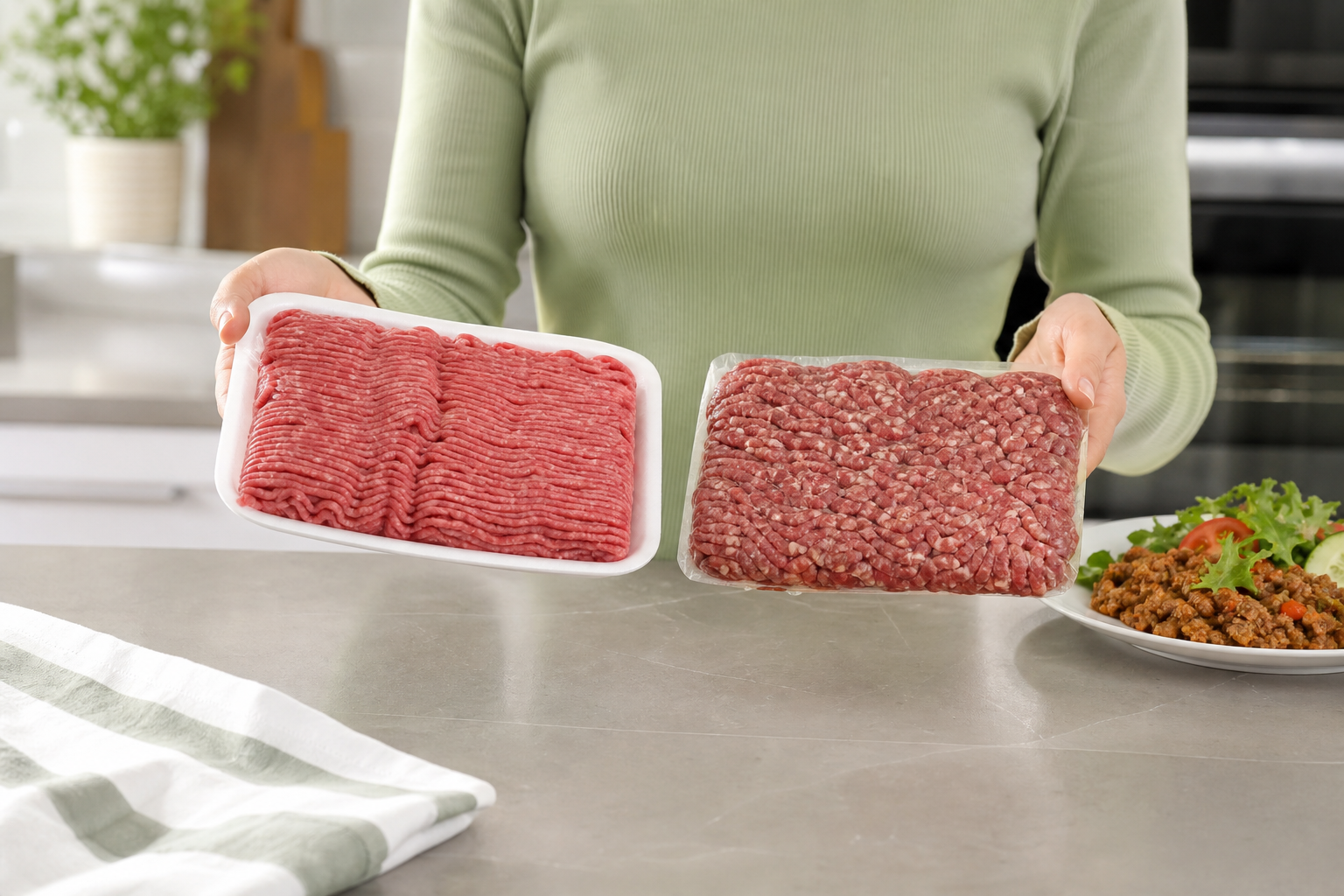
A simple way to shop smarter is to place two or three packages side by side and compare the key numbers. You do not need to memorize percent ranges. You only need to compare calmly.
Look for differences in:
- Total fat per serving.
- Saturated fat per serving.
- Protein per serving.
- Calories per serving.
- Price per pound or kilogram, so you can weigh nutrition against cost.
Sometimes the cheaper package is not the one that matches your goal. Other times, paying more does not bring a meaningful nutrition advantage. Comparing labels helps you choose based on facts, not habit.
Common mistakes when choosing ground beef
People often make a few predictable mistakes when shopping for healthier ground beef:
- Assuming more protein always means a better choice.
- Trusting the front label without checking the nutrition panel.
- Confusing a marketing phrase with the actual nutrition data.
- Looking only at calories and ignoring saturated fat.
- Buying without comparing two similar packages.
It is also a mistake to assume that the leanest option is always the best one for every recipe. Very lean ground beef can change texture and may not suit every dish.
Practical tips for a more informed purchase
If you want to keep the decision simple, use this quick sequence:
- Check the serving size.
- Compare total fat, saturated fat, protein, and calories [1].
- See whether the package says lean or extra lean [2].
- Review the date and the condition of the package [3][4].
- Choose based on your recipe and how often you plan to eat it.
If you buy ground beef often, this habit makes decisions faster over time. The goal is not to make shopping more complicated; it is to make it clearer.
Helpful takeaway
Knowing how to choose healthier ground beef comes down to comparing real numbers, not relying on one word from the front of the package. When you review the label, fat percentage, protein, and package condition, you make a more informed choice that fits your goals better.
If you have specific questions about your diet, a health or nutrition professional can help you adapt those choices to your needs.
Sources consulted
- [1] Understanding and Using the Nutrition Facts Label — U.S. Food and Drug Administration — https://www.fda.gov/media/135625/download?attachment=
- [2] Beef From Farm to Table — USDA Food Safety and Inspection Service — https://www.fsis.usda.gov/food-safety/safe-food-handling-and-preparation/meat-catfish/beef-farm-table
- [3] Ground Beef and Food Safety — USDA Food Safety and Inspection Service — https://www.fsis.usda.gov/food-safety/safe-food-handling-and-preparation/meat/ground-beef-and-food-safety
- [4] Fechas en Productos Alimenticios — USDA Food Safety and Inspection Service — https://www.fsis.usda.gov/food-safety/safe-food-handling-and-preparation/food-safety-basics/fechas-en-productos-alimenticios
- [5] Facts about saturated fats — MedlinePlus — https://medlineplus.gov/ency/patientinstructions/000838.htm