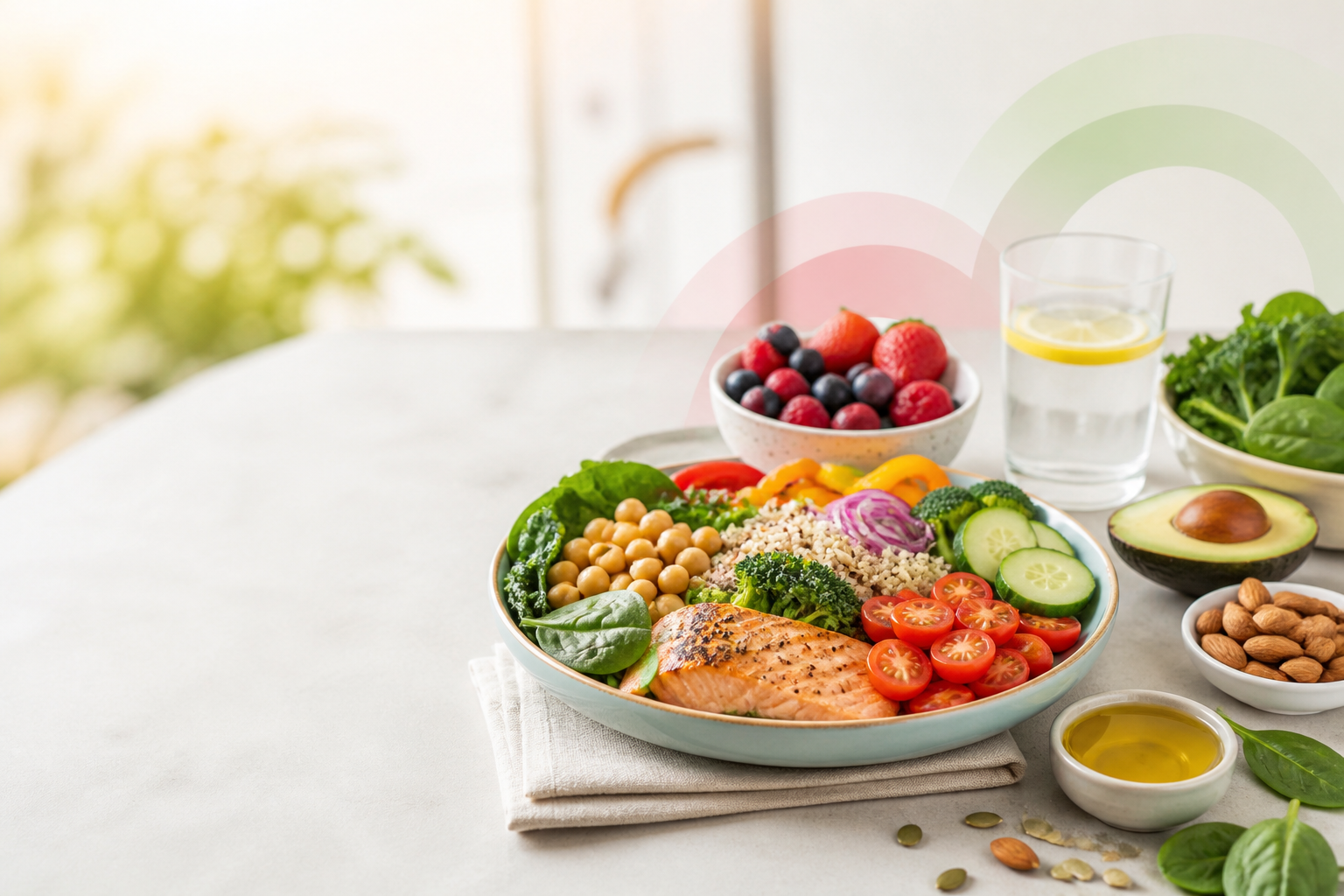
How food relates to blood pressure
Food does not work on its own, but it can play an important role in blood pressure control as part of an overall healthy routine. In general, blood pressure guidelines emphasize lowering sodium and making room for foods that provide potassium, magnesium, fiber, and other nutrients that support cardiovascular health [1][2].
That is why people searching for foods to help support blood pressure control often benefit more from an overall eating pattern than from looking for a single “best” food. The DASH eating plan, for example, focuses on fruits, vegetables, whole grains, legumes, nuts, and low-fat dairy while keeping sodium lower [1].
Key nutrients to prioritize
Potassium
Potassium is often mentioned in blood pressure guidance because it is part of a balanced eating pattern related to heart health. Guidelines commonly point to naturally potassium-rich foods such as fruits, vegetables, and legumes [1][2].
Magnesium
Magnesium is also part of that same nutrition framework. The goal is not to chase one isolated ingredient, but to build meals that help cover it through regular food choices [1][2].
Fiber and healthy fats
Fiber and healthy fats support heart health overall. That is why whole grains, legumes, nuts, and seeds often appear in heart-healthy and blood pressure-friendly eating plans [1][3].
Foods that fit a balanced eating pattern
There is no single list that works for everyone, but some food groups fit especially well into a dieta para la presión arterial alta and a heart-focused routine.
Fruits
Fruits provide fiber and, in many cases, potassium. They are an easy way to add variety to breakfast, snacks, or everyday desserts [1][2].
Vegetables
Vegetables rich in potassium and other micronutrients help build more complete meals. The more variety you include across the day, the easier it becomes to keep the pattern balanced [1][3].
Legumes, nuts, and seeds
Legumes, nuts, and seeds are versatile options for main meals or healthy snacks for blood pressure. They can also make meals more satisfying without relying so heavily on ultra-processed foods [1][3].
Dairy or unsweetened alternatives
The DASH plan includes low-fat dairy, and in general it is helpful to choose simple options without added sugars [1][3]. If someone does not eat dairy, unsweetened alternatives can fit into a balanced pattern as well.
Whole grains
Whole grains are a useful base for breakfasts and main meals. They provide fiber and help keep eating habits more consistent throughout the day [1][3].
Practical meal ideas for everyday life
A balanced diet does not have to feel complicated. In fact, some of the best options are simple and repeatable.
- Breakfast: oatmeal with fruit and plain yogurt.
- Mid-morning snack: a piece of fruit or a small handful of nuts.
- Lunch: a plate with vegetables, legumes, and a whole grain.
- Afternoon snack: plain yogurt or an unsweetened option.
- Dinner: vegetables with lean protein and a whole grain base.
These combinations do not promise immediate results, but they do help build a routine that better supports cardiovascular health [1][3].
What to limit
Knowing what to include is useful, but it also helps to notice what shows up too often.
Too much salt and ultra-processed foods
Blood pressure guidelines consistently recommend lowering sodium, so it makes sense to limit very salty foods and ultra-processed items [1][2][3]. Often the issue is not only added salt, but also the amount of packaged food that concentrates sodium.
Sugary drinks and excess alcohol
Cardiovascular guidance also suggests moderating sugary drinks and excess alcohol [3]. There is no need for extreme rules; it is usually more practical to reduce frequency and portion size.
Reading labels can help
Nutrition labels make it easier to compare products and choose lower-sodium options [4]. This simple habit is useful because it supports better choices even when buying packaged foods.
How to build a sustainable diet
The best blood pressure-friendly diet is usually the one you can maintain over time. Instead of changing everything at once, small adjustments can be more realistic:
- add one fruit to breakfast;
- include one more vegetable at lunch or dinner;
- swap refined grains for whole grains;
- check sodium on packaged foods;
- plan a few healthy snacks to avoid last-minute choices.
The DASH approach and medical guidance agree that sustainable changes based on a variety of foods are a sensible way to support cardiovascular health [1][2][3].
When to talk with a health professional
If blood pressure is elevated or hypertension has already been diagnosed, it can be helpful to discuss diet changes with a health professional so the plan fits the person’s needs [5]. Everyone’s situation is different depending on age, habits, preferences, and other health factors.
Food can support blood pressure management, but it does not replace medical care when that care is needed [5].
Final thoughts
Thinking about alimentos para regular la presión arterial does not have to lead to strict diets or quick fixes. A balanced pattern with more fruits, vegetables, legumes, whole grains, nuts, and less sodium is usually a more sustainable approach [1][3].
If the goal is to improve eating habits for blood pressure, a simple starting point is often the best one: eat a little more variety, read labels more carefully, and keep small changes that are realistic in daily life.
Sources consulted
[1] DASH - DASH Eating Plan, National Heart, Lung, and Blood Institute (NIH), https://www.nhlbi.nih.gov/health/dash-eating-plan?cid=BING
[2] DASH diet to lower high blood pressure, MedlinePlus, https://www.medlineplus.gov/ency/patientinstructions/000770.htm
[3] Managing Blood Pressure with a Heart-Healthy Diet, American Heart Association, https://www.heart.org/en/health-topics/high-blood-pressure/changes-you-can-make-to-manage-high-blood-pressure/managing-blood-pressure-with-a-heart-healthy-diet
[4] Nutrition Facts Label and Your Health, Centers for Disease Control and Prevention (CDC), https://www.cdc.gov/healthy-weight-growth/healthy-eating/nutrition-label.html
[5] Controlling your high blood pressure, MedlinePlus, https://www.medlineplus.gov/ency/patientinstructions/000101.htm