What obstructive hypertrophic cardiomyopathy is and why food matters
Healthy eating for obstructive hypertrophic cardiomyopathy does not replace medical care, but it can be part of a more structured and heart-friendly daily routine. Hypertrophic cardiomyopathy is a condition in which the heart muscle becomes thicker and may interfere with normal blood flow [1]. Because of that, many people look for practical food habits that support heart health without making daily life more complicated.
In this context, a diet for hypertrophic cardiomyopathy usually focuses on three simple ideas: choosing fresher foods, watching sodium, and keeping hydration reasonable according to professional guidance [1][2][3].
Goals of a diet for hypertrophic cardiomyopathy
There is no single perfect plan for everyone, but there are a few general goals that are often helpful:
- Support a heart-healthy eating pattern.
- Avoid excess sodium in the diet.
- Maintain good hydration and cardiac health habits.
- Reduce discomfort that can come with very heavy or irregular meals.
The goal is not extreme restriction. It is to build a sustainable heart-protective meal plan that works in real life [2].
What to eat with cardiomyopathy: practical patterns
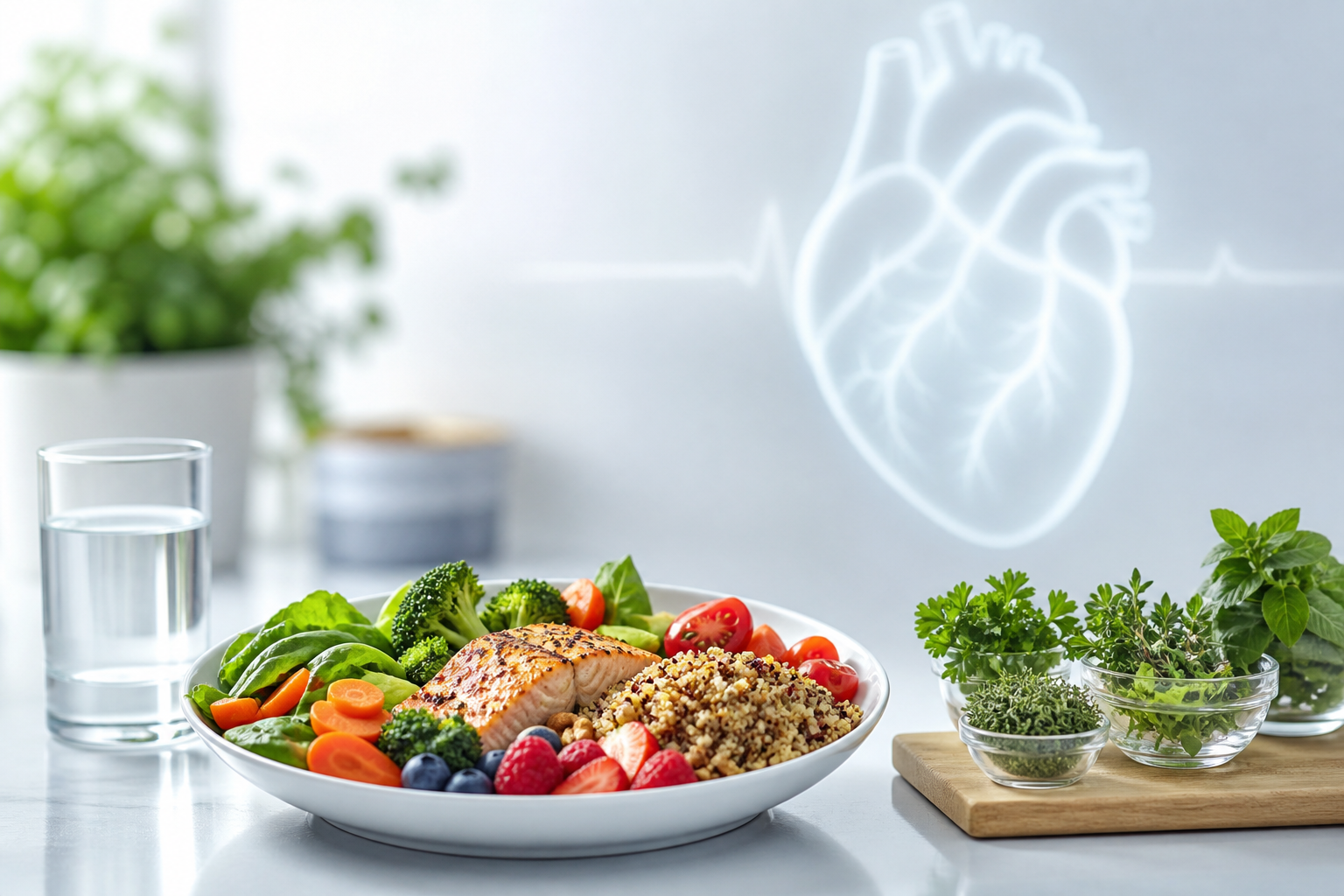
When someone asks what to eat with cardiomyopathy, the general answer points toward fresh, minimally processed foods. The National Heart, Lung, and Blood Institute recommends prioritizing fruits, vegetables, whole grains, legumes, and lean proteins as part of a heart-healthy eating pattern [2].
A simple way to build meals is:
- Fill half the plate with fruits and vegetables.
- Include a serving of whole grains.
- Add a lean protein source.
- Pair the meal with water or other drinks that fit the care plan.
These heart-friendly eating habits are not meant to “fix” the condition, but they can support daily management through a more balanced routine [2].
Sodium control in the diet: what to watch
One of the most important parts of a low sodium diet is learning where hidden sodium comes from. It is not only in table salt; it is also common in prepared, canned, and highly processed foods [3].
To improve sodium control in the diet, it can help to:
- Read nutrition labels carefully.
- Compare similar products and choose the lower-sodium option.
- Cut back on packaged and ultraprocessed meals.
- Use simple seasoning methods that do not depend on extra salt.
The NIH sodium fact sheet emphasizes label reading and choosing lower-sodium foods as practical steps for everyday life [3].
Hydration and cardiac health: balance matters
Hydration and cardiac health often go together because the body needs the right balance of fluids and electrolytes to function well [4]. For people with obstructive hypertrophic cardiomyopathy, this can be especially relevant, although individual needs may vary based on professional advice [4].
In practice, it can help to:
- Spread fluid intake throughout the day.
- Avoid going long hours without drinking if that does not match medical guidance.
- Notice how the body responds on hot days, busy days, or days with less appetite.
- Ask a health professional if there are questions about fluids, sodium, or electrolyte balance and the heart.
The point is not to drink more by default, but to aim for a balanced and personalized approach [4].
Heart-friendly eating habits that may help
Beyond food choices, the way meals are organized also matters. Some heart-friendly eating habits that can make daily life easier include:
- Keeping regular meal times.
- Avoiding very large meals if they tend to cause discomfort.
- Eating more slowly and with less rush.
- Limiting sugary drinks and very salty packaged foods.
- Paying attention to how the body responds to certain meals.
These are not medical interventions. They are everyday adjustments that can support general well-being and help reduce issues linked to a disorganized eating pattern [2][3].
Common mistakes when trying to eat better
Some people think heart-healthy eating only means stopping table salt. In reality, sodium can come from many places [3]. Other common mistakes include:
- Not checking labels on prepared foods.
- Relying too much on processed foods for convenience.
- Skipping meals and then eating too much later.
- Following very restrictive diets without professional guidance.
- Ignoring hydration and fluid-electrolyte balance.
A more useful strategy is usually to make small, sustainable changes rather than drastic ones that are hard to maintain.
When to talk with a health professional
Food choices can be tailored better when they are coordinated with medical care for cardiomyopathy. It is a good idea to ask for guidance if there are questions about:
- How much sodium is appropriate in a specific case.
- How to organize fluids and hydration.
- Changes in symptoms or meal tolerance.
- How to personalize nutrition for heart disease.
A professional can help turn these general recommendations into a plan that fits the person.
Closing thoughts
Cardioprotective eating does not have to be complicated. With more fresh foods, less hidden sodium, regular meal timing, and thoughtful hydration, it is possible to build a routine that supports heart care in a realistic way. The most useful changes are the ones that are sustainable and aligned with clinical guidance.
Sources consulted
- [1] American Heart Association, Hypertrophic Cardiomyopathy (HCM) — https://www.heart.org/en/health-topics/cardiomyopathy/what-is-cardiomyopathy-in-adults/hypertrophic-cardiomyopathy
- [2] National Heart, Lung, and Blood Institute (NIH), Heart-Healthy Living - Choose Heart-Healthy Foods — https://www.nhlbi.nih.gov/health/heart-healthy-living/healthy-foods
- [3] National Heart, Lung, and Blood Institute (NIH), Choose Foods Low in Sodium Fact Sheet — https://www.nhlbi.nih.gov/resources/choose-foods-low-sodium-fact-sheet
- [4] MedlinePlus, Fluid and Electrolyte Balance — https://medlineplus.gov/fluidandelectrolytebalance.html